Global & Culturally Diverse Leadership in the 21st Century
The Power of Moral Resilience in Leading Through Turbulent Times
By Lynn Pasquerella
Epilogue by Antonio Jimenez Luque, Gayle Skawen:nio Morse, and Joseph E. Trimble
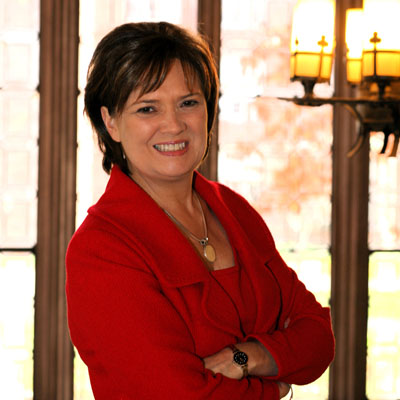 Lynn Pasquerella was appointed president of the American Association of Colleges and Universities in 2016, after serving as the eighteenth president of Mount Holyoke College. She has held positions as provost at the University of Hartford and Vice Provost for Academic Affairs and Dean of the Graduate School at the University of Rhode Island. A philosopher whose work has combined teaching and scholarship with local and global engagement, Pasquerella has written extensively on medical ethics, metaphysics, public policy, and the philosophy of law. She is immediate past president of the Phi Beta Kappa Society and the host of Northeast Public Radio’s The Academic Minute. Photo courtesy Mary Noble Ours.
 In 2020 Gayle Skawen:nio Morse, Ph.D., was the recipient of the American Psychological Association’s Sweetgrass Award. The Sweetgrass Award honors a psychology professional who advances indigenous values through outstanding professionalism and service. Dr. Morse’s work in education, research and clinical practice highlights the connections between mental health, community health and environmental stewardship. She is a professor of Counseling and Community Psychology and director of the graduate Psychology programs at Russell Sage College, and she frequently speaks and writes about ethics, social justice, women’s issues, student learning and the neuropsychological effects of environmental toxins. Her recent scholarship includes an article about psychoanalytic and indigenous understandings of dreams in “Black, Indigenous, Women of Color Talk Back: Decentering Normative Psychoanalysis,” a special edition of the journal Studies in Gender and Sexuality published in June 2020, and “A Detoxification Intervention for Gulf War Illness: A Pilot Randomized Controlled Trial,” coauthored by Morse, in the International Journal of Environmental Research and Public Health in October 2019. Dr. Morse is a New York state licensed psychologist with a private practice. She is an enrolled member of the Mohawk tribe and former president of the Society of Indian Psychologists, which represents indigenous psychologists in the United States and Canada. “My Kanienkehaka (Mohawk) background has given me the foundation to do the work that I love,” said Morse. “The Kanienkehaka principles of Skennen, Kariwiio and Kasastensera — or peace, good mind and strength — are achieved by respecting the environment and people, and are what fuel my efforts.”
 Joseph E. Trimble (PhD, Institute of Group Relations, University of Oklahoma) retired in June 2020. Throughout his career, he focused his efforts on promoting psychological and sociocultural research with indigenous populations, especially American Indians and Alaska Natives, and he is involved in research on the influence of cultural diversity leadership styles and practices. Some of his career highlights include being a Senior Scholar at the Tri-Ethnic Center for Prevention Research and a Research Associate for the National Center for American Indian and Alaska Native Mental Health Research at the University of Colorado Health Sciences Center. He was a President’s Professor at the Center for Alaska Native Health Research at the University of Alaska Fairbanks, and in 2017-2018 he was a Visiting Scholar in the School of Psychology and Neuroscience at the University of St. Andrews in Scotland. Outside the academy, he has served on numerous scientific review committees and research panels for federal agencies such as NIAAA, NIMH, NIDA, NIH, and National Academy of Sciences, among others. He has presented over 180 papers and invited addresses and generated over 150 publications, including 22 authored or edited books. He is the recipient of the Peace and Social Justice Award given by APA’s Division of Peace Psychology and the Gold Medal Award for Lifetime Achievement in Psychology in the Public Interest from the American Psychological Foundation. Trimble is co-editor with Jean Lau Chin and Joseph Garcia of ILA’s 2017 book Global and Culturally Diverse Leaders and Leadership: New Dimensions and Challenges for Business, Education, and Society.
 Antonio Jimenez-Luque, PhD, is an Assistant Professor at the University of San Diego. From 2004-2013, Jimenez-Luque was the Coordinator for the International Cooperation for Development at the University of Barcelona Solidarity Foundation working with universities, grassroots organizations, and social movements in Latin America, Africa, and Asia. In 2014, he moved to the United States to work at Gonzaga University for the Associate Vice-President for Equity, Diversity, and Inclusion as Intercultural Research Associate, and taught a variety of classes including Leading Across Cultures. Since 2018, he has been teaching at the University of San Diego and developing his research agenda on issues of leadership and social justice from a critical, global, and intercultural perspective.
My first lessons in organizational leadership came from watching my mother as I worked alongside her for a summer doing piecework in a local light switch factory in the small, New England mill town in which I was raised. At 16, it was my initial encounter with being in a community of women, many of whom, like my mother — already married at my age and a single parent by the time I was 11 — were bright and talented but constrained by the circumstances of their lives from pursuing education. The only men visible at the plant were on the loading docks, in the boss’s office, or outside by their catering trucks in the expansive dirt parking lot.
I can still remember the sense of urgency around making the day’s quota, understanding that, for some, the resulting take-home pay meant the difference between being able to feed their children or having them go hungry. I learned the true meaning of teamwork and perseverance. But perhaps most importantly, I came to understand the effects of gendered power structures and how institutional and organizational cultures can serve to legitimize and perpetuate sexism, racism, and classism. Yet, by observing my mother in her role as shop steward, I also learned how women’s leadership can transform organizational and institutional cultures and empower even the most marginalized members of the community.
Elected by her co-workers to represent them in dealings with management, my mother embodied the traits often used to describe a good shop steward — organizer, negotiator, counselor, peacemaker, and troublemaker. I couldn’t have known then that the same characteristics that made her such a strong advocate in a factory setting would inform my leadership as a college president and CEO of a higher education association.
The world I have inhabited since the age of 17 was alien to my parents, neither of whom had the opportunity to graduate from high school. They spent most of their lives working in the mills and manufacturing plants that welcomed their parents and grandparents as immigrant workers. When I graduated from high school, I had the opportunity to embark on a different path only because of funding I received under the federal Comprehensive Employment and Training Act (CETA). An extension of the Works Progress Administration project, begun under Franklin Roosevelt’s New Deal, CETA was enacted by Congress in 1973. The goal was to enhance public service employment through job training in a public agency or non-profit organization over a 12 to 24-month period. The funds, administered by state and local governments charged with identifying community needs, subsidized full-time jobs, including summer jobs for high-school students who were low-income and at risk of permanent unemployment.
My first summer out of high school, I served as an enumerator, going door to door gathering information from families that could be used to secure government assistance for a wide range of social services. Through this work, I began to develop the skills of close observation; listening critically by paying full attention to what others were saying, while reading between the lines; asking appropriate questions; effectively conveying information to people from different backgrounds; recognizing and understanding the reactions of others; and writing with precision, coherence, and clarity to communicate relevant qualitative data. As it turns out, these capabilities are essential for effective leadership in any setting, and when I reminiscence about my experience, I am reminded of why it is so important to provide students, especially those who lack social and cultural capital, with the opportunity to reflect on how the skills they acquire both inside and outside of the classroom can be used to create a compelling narrative that connects to their career objectives. As a first-generation college student, it never occurred to me that the competencies I had gained from working since I was 14 would matter beyond the paycheck that I earned to help support us.
That fall, I continued working 35 hours a week under a CETA grant, in the president’s office, library, and biology labs, while attending Quinebaug Valley Community College. The college had opened only a few years earlier, with four full-time faculty members housed in trailers on the campus of a technical school. Classes were held across town in church basements and after hours in elementary and high school classrooms. I had made the decision to forgo a scholarship to my state’s flagship university so that I could serve as a caregiver to my mother, who had become chronically ill. Two years later, with the additional help of Pell grants and Perkins loans, I transferred to Mount Holyoke College, making the hour-and-a-half drive home every weekend to continue meeting my family obligations. During those late-night drives, I often thought about the ways in which the passionate quest of Mount Holyoke’s founder, Mary Lyon, to offer education to women from modest means, represented freedom from economic oppression and an invitation for women to be intellectually adventurous. Her enjoinder to the college’s earliest graduates to “Go where no one else will go. Do what no one else will do,” continues to serve as an inspiration.
Undaunted by the lack of job prospects for philosophers, within another two years, I was headed to Brown for my Ph.D. When I graduated, I vowed that I would never forget the lessons I learned in the transition from the factory floor to the halls of academia. As a result, throughout my career, I have championed access to excellence for students regardless of socioeconomic background, the centrality of liberal education at institutions of all types, and higher education’s public purpose. I am ever grateful for the investment the government made in me through CETA funding, and I have always taken seriously the public service commitment it entailed. In my 23 years as a philosophy professor at the University of Rhode Island (URI), I eagerly served on committees, acted as a mentor, and engaged in community-based learning and outreach as a means of promoting student success, professional development for faculty and staff, and public intellectualism.
Along the way, I was invited to take on a variety of administrative roles, first as department chair, then as associate dean of the graduate school and interim vice provost for research, and finally as the vice provost for academic affairs and dean of the graduate school. While I never aspired to be anything other than a college professor, I was honored to contribute in whatever way possible, following the example of my mother to give back to whatever community in which one is a member. When I left URI to become provost at the University of Hartford, it was because I was drawn to their mission of being “a private university with a public purpose.” And when I was appointed to the presidency of Mount Holyoke, it was beyond my wildest dreams to be able to play such a significant role in serving an institution that had transformed my life.
Now, as the president of the American Association of Colleges and Universities, I have the privilege of working with colleagues dedicated to advancing the vitality and public standing of liberal education by making quality and equity the foundations for excellence in undergraduate education in service to democracy. Amidst a global pandemic, the ensuing financial crisis, and moment of racial reckoning in America, higher education’s democratic purposes are more critical than ever. Yet, the capacity to fulfill our nation’s historic mission of educating for democracy is under burgeoning threat. Polarization and partisanship are greater than they have been since the Civil War, and the subsequent culture wars include attacks on higher education and on the truth. Legislative efforts appearing across the country — aimed at chilling certain speech by banning the teaching of Critical Race Theory and proscribing diversity training, restricting scholarship funding to those who major in disciplines deemed “immediately employable,” and prohibiting mask and vaccination mandates — alongside the rise in state governing boards intervening in tenure decisions and accrediting processes, should signal a call to action for campus leaders.
Yet, as Trinity College of Washington president Patricia McGuire (2021) notes in a Chronicle of Higher Education commentary on the assault on American democracy: “College presidents rarely speak out on issues that they consider ‘too political,’ for fear of alienating donors or governors or state legislators who might retaliate by withdrawing funding. This fear of making some powerful people angry — a fear of losing money — has debilitated not only the voice but also the real purpose of higher education, as the place where students should develop critical- and moral-reasoning habits that will serve them well in future positions of responsibility. If we presidents shrink from telling the truth out of a fear of alienating people whose favor we crave, what are we teaching our students?”
What, indeed? I worry that, more and more, campus leaders are experiencing moral distress from being coerced into making decisions they believe are unethical but are convinced they have no choice. Unlike moral dilemmas, which occur when no matter what course of action one takes, some ethical principle will be violated, moral distress arises when there is a continual erosion of one’s ethical values. Insofar as presidents’ responses to moral distress have a profound impact on higher education’s capacity to fulfill its broader purpose of educating for democracy, campus leaders must make a concerted effort to exercise moral courage.
In making this plea, I am mindful of humorist Mark Twain’s adage that “To be good is noble, but to teach others how to be good is nobler — and less trouble.” The types of challenges college leaders are facing today are rarely a matter of following simple guidelines, and while a readiness to put one’s job on the line is a prerequisite for being a strong leader, it is nevertheless legitimate, at times, to ask how much individual injustice should be countenanced for the sake of long-term reform. Moreover, even when the correct course of action is clear, aligning one’s inner character with outward behaviors is not always simple, particularly when it might mean the loss of livelihood or prestige.
Under the circumstances, what is needed is moral resilience. Developing moral resilience — the capacity to sustain, restore, and deepen integrity in the face of moral complexity, confusion, and distress — requires a willingness to examine one’s moral beliefs, clearly identify one’s values and level of responsibility, and understand one’s limitations. Moral resilience can be fostered in a number of ways including engaging in pre-emptive decision-making by reviewing scenarios that might thwart one’s commitment to doing the right thing, being honest and transparent about the values driving one’s decisions, creating an institutional culture of ethical practice where the expectation that one will act with integrity is palpable, and entertaining the possibility that some of one’s most fundamentally held beliefs might be mistaken.
This work cannot be done successfully in response to immediate crisis, but of necessity takes place over time. Reaffirming daily the values that led you to your leadership role in the first place will make it easier to exercise moral courage by speaking out against concerns, while simultaneously limiting moral distress. Leveraging networks among leaders on other campuses can also serve as a powerful tool for navigating moral complexities and signals the imperative of systems-focused interventions in which higher education, as a sector, strives to create a culture that supports and celebrates moral courage.
In these days of widespread moral distress for campus leaders, I often think back to the lessons I learned from my mother — about what it means to be a troublemaker when confronted by injustice and, more poignantly, about the psychic toll of not being one.
Epilogue: Reflections on The Power of Moral Resilience in Leading Through Turbulent Times
By Gayle Skawen:nio Morse, Joseph E. Trimble, and Antonio Jimenez Luque
My mother, her reverence for the divine, her generosity, her inability not only to do wrong but even to conceive of doing it. And the simple way she lived — not in the least like the rich.
A man makes no noise over a good deed but passes on to another as a vine to bear grapes again in season.
- Derived from The Emperor Marcus Aurelius Antoninus: His Meditations; Or, Discourses With Himself, Roman Emperor and Philosopher Marcus Aurelius Antonius, 121-180CE.
There are many lessons in Dr. Pasquerella’s text that show us a pathway to goodness and goodness in leadership. Dr. Pasquerella writes eloquently about the lessons learned at her mother’s knee and shows us how she applied what she learned as she moved through the world and moved into the upper echelons of leadership. She can discuss both the positive ways to move forward in a good way with a strong moral compass and also what might happen should one lose their North Star. Perhaps she can meet this challenge because of her background in philosophy and those connections to the ancients, and her deep connection to the lessons she learned from her mother in her here-and-now moments. Through her eyes, we hope to understand better moral resilience in leadership, why moral leadership is important, and how to attain it.
Plato (c.387BCE) and Aristotle (c.334BCE) carefully described moral leadership and the relationship to ethical leadership. In a less elegant nutshell, they posited that moral virtues are not innate systems to achieve ultimate happiness but something that can be learned on a quest for excellence. Happiness was seen as the highest aim of moral behavior and thought. While virtues or excellence is how we achieve the goodness that allows us to focus on our goal. Our drive to achieve good is also fueled by what we learn to grow that goodness.
Excellence, though, can be eroded by moral distress. The term moral distress was first coined by philosopher Andrew Jameton (1984), who described moral distress as psychological in nature and stemming from a situation where doing the right and proper thing is somehow limited or restricted. In part, because he taught nurses, his examples are from the medical field. One example is not reviving a person whose heart has stopped because there was a do-not-resuscitate order written by a doctor, but the family wanted them to try to resuscitate the person. This was reported as inconsistent with the nursing ethical principles of beneficence, nonmaleficence, fidelity, accountability, veracity, and patient autonomy.
This particular distress may be experienced as an erosion of the leader's ethical values and may lead to emotional exhaustion. Furthermore, as Lützén and Ewalds-Kvist (2013) argue, moral distress may be considered psychologically connected to diminished moral sensitivity. Dr. Pasquerella suggests that moral resilience can offset the potential damage of moral distress and consider the individual’s ability to see, note, and state the issue within an ethically immoral or unwelcoming climate. Therein is the problem. One must find the courage, the moral resilience as a leader, to exercise moral decision-making and act with integrity in the face of alienation.
Dr. Pasquerella noted that she "championed access to excellence for students regardless of socioeconomic background." Excellence is the holy grail to achieve that goodness and moral value system of leadership. She argues that we must not only offer opportunities for students but show them how to build their internal system and inner character so they can confidently navigate the waters of distress, stress, and the fears of alienation — some might even say annihilation.
The lessons she learned consciously and unconsciously through a lifetime with eyes wide open are not easy fixes but require individual, group, and institutional change. Her prescription requires individuals' deep examination of their belief system and how that is intertwined with decision-making, commitment to doing the right thing, and being honest about how personal values drive one's decisions. She also suggests that the required institutional change can occur over time by speaking out and utilizing institutional leadership as a tool to manage moral complexities and understand the imperative of systems-focused interventions. Indeed, Lützén and Ewalds-Kvist (2013) suggest that relational engagement and interdisciplinary dialogue can mitigate moral distress and support moral resiliency.
In the end, she implicitly asks us to examine whether the risk of speaking out about the mandates that might cause moral distress is worse than the psychological toll of not doing so. Her mother's lived experience is a profound example of how moral courage can lead you to the best outcomes.
References
Jameton, A. (1984). Nursing Practice: The Ethical Issues. Prentice-Hall.
Lützén, K., & Ewalds-Kvist, B. (2013). Moral Distress and Its Interconnection With Moral Sensitivity and Moral Resilience: Viewed From the Philosophy of Viktor E. Frankl. Journal of Bioethical Inquiry, 10(3), 317–324. https://doi.org/10.1007/s11673-013-9469-0
McGuire, P. (2021, January 8). Colleges Share the Blame for Assault on Democracy. The Chronicle of Higher Education. https://www.chronicle.com/article/colleges-share-the-blame-for-assault-on-democracy